
"Civic Center"
70 article(s) found

Introduction to the flavor and taste of the fragrant San Roman Coffee Manor in Costa Rica
Costa Rica is located in the Central American isthmus, belonging to North America, 10 north latitude, 84 west longitude. It is bordered by the Caribbean Sea to the east and the North Pacific Ocean to the west, with a coastline of 1290 km (212km on the east coast and 1016 km on the west coast). Costa Rica borders Nicaragua in the north (309 km long border) and Panama (639 km long border) south-southeast. Total

The taste of Costa Rican coffee is mellow. Introduction to the characteristics of fine coffee in the manor area.
Costa Rica is located in the Central American isthmus, belonging to North America, 10 north latitude, 84 west longitude. It is bordered by the Caribbean Sea to the east and the North Pacific Ocean to the west, with a coastline of 1290 km (212km on the east coast and 1016 km on the west coast). Costa Rica borders Nicaragua in the north (309 km long border) and Panama (639 km long border) south-southeast. Total

Introduction to the flavor and taste characteristics of Costa Rican coffee manor
The topography of Costa Rica is that the coast is surrounded by plains, while the middle is cut off by rugged mountains. The country declared 200 nautical miles in its exclusive economic zone and 12 nautical miles in its territorial sea. The climate is tropical and subtropical, and there is also part of the new tropical Costa Rica, which accounts for only 0.03% of the world's land area, but has nearly 4% of the world's species, making it the country with the richest biological species in the world.

Development and change of Coffee: from Medicinal use to drinking
Coffee for drinking is said to have begun at the beginning of the eleventh century, and the record can be seen in ancient Arab documents. Before that, coffee beans were dried and boiled in the Arab region and then drank as stomach medicine, but later learned that coffee also had a refreshing effect, coupled with the strict Muslim commandments that forbade believers from drinking, and believers used coffee juice from roasting as a substitute for wine.

When was coffee fruit discovered to be used to make coffee beans?
The origin of this plant can be traced back to millions of years ago, in fact, the real age when it was discovered can no longer be tested. It is only said that coffee is a shepherd named Kaldi in the highlands of Ethiopia. When he discovered that his sheep had inadvertently eaten the fruit of a plant, he became very lively and full of vitality, and then he discovered coffee. All historians seem to be

Introduction to the flavor and taste characteristics of Costa Rican goddess manor coffee
Costa Rica is located in the Central American isthmus, belonging to North America, 10 north latitude, 84 west longitude. It is bordered by the Caribbean Sea to the east and the North Pacific Ocean to the west, with a coastline of 1290 km (212km on the east coast and 1016 km on the west coast). Costa Rica borders Nicaragua in the north (309 km long border) and Panama (639 km long border) south-southeast. Total

Introduction to the flavor and taste characteristics of Costa Rican goddess manor coffee with mild acidity and good sweetness
The topography of Costa Rica is that the coast is surrounded by plains, while the middle is cut off by rugged mountains. The country declared 200 nautical miles in its exclusive economic zone and 12 nautical miles in its territorial sea. The climate belongs to the tropics and subtropics, and part of it is the neo-tropics. The climatic conditions of Costa Rica are completely different, completely subverting the classification of the four seasons of the year. There are only two seasons. April to December is the rainy season.

Light and pure flavor of Costa Rican Yerzaro boutique coffee beans taste manor plantation
All the coffee trees planted in Costa Rica are Arabica coffee trees. through improvement, the quality of coffee beans is better and more stable. in order to facilitate picking, coffee trees are kept at a height of about 2 meters through continuous pruning. The coffee that people eat is the taste of the seeds in the fruit that are brewed in water. After picking raw coffee beans, the peel, pulp, seed film and sun exposure must be removed.

Cafe Plus | how does this "Starbucks for the elderly" change the lifestyle of the elderly
Communication of professional baristas Please pay attention to the coffee workshop (Wechat official account cafe_style) after the elderly retire, in addition to their families, they have a lot of free time to spend at their disposal. After entering the retirement state, most of the elderly people's life no longer revolves around work and family, and public places become the center of daily life. Break away from the familiar enterprise organization, many old people

Introduction of Costa Rican Yerzaro boutique coffee bean flavor manor with light and pure flavor
Costa Rica is located in the Central American isthmus, belonging to North America, 10 north latitude, 84 west longitude. It is bordered by the Caribbean Sea to the east and the North Pacific Ocean to the west, with a coastline of 1290 km (212km on the east coast and 1016 km on the west coast). Costa Rica borders Nicaragua in the north (309 km long border) and Panama (639 km long border) south-southeast. Total

A brief introduction to the fresh and full-bodied Fine Coffee Bean Flavor and Flavor
The research center, located about 30 kilometers northeast of the Costa Rican capital San Jose, belongs to the Costa Rican Coffee Association and is a research institution for villa sarchi planting, breeding and quality inspection newly developed by Costa Rica's national coffee breeds. in addition, it also has 10 hectares of experimental plots, planting a number of excellent varieties. Coffee is the main agricultural product in Costa Rica, with an annual output of more than 2 million bags

Introduction to the characteristics of Coffee Flavor varieties in Saint Roman Manor, Costa Rica
The topography of Costa Rica is that the coast is surrounded by plains, while the middle is cut off by rugged mountains. The country declared 200 nautical miles in its exclusive economic zone and 12 nautical miles in its territorial sea. The climate belongs to the tropics and subtropics, and part of it is the neo-tropics. The climatic conditions of Costa Rica are completely different, completely subverting the classification of the four seasons of the year. There are only two seasons. April to December is the rainy season.
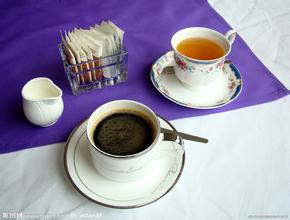
Introduction to fine coffee with mild acidity and taste characteristics of Costa Rican goddess manor coffee
The current Constitution entered into force on November 7, 1949. The Constitution stipulates that the state implements a republic with the separation of legislative, judicial and executive powers. The General Audit Office and the Supreme Electoral Court are independent bodies. The President shall be the head of State or Government and may stand for re-election every other term; the President and Vice President shall be directly elected for a term of four years; when the President is absent, the first Vice President and the second Vice President shall negotiate in turn.

Description of taste and flavor of Costa Rican coffee an introduction to the characteristics of fine coffee beans
Oil is completely dependent on imports, mainly from Colombia and other countries, and is monopolized by the National Oil Company (RECOPE), with an average annual import of 3 million tons of crude oil. Since 2012, the national oil company has suspended crude oil refining production due to aging facilities, and all fuel oil has been imported instead. In 2013, Costa Rica imported 19.3 million barrels of oil, with imports of US $2.3 billion, accounting for 5.5% of GDP.

Introduction to the flavor and taste of the coffee producing area of Costa Rica's Saint Roman Coffee Manor
The topography of Costa Rica is that the coast is surrounded by plains, while the middle is cut off by rugged mountains. The country declared 200 nautical miles in its exclusive economic zone and 12 nautical miles in its territorial sea. The climate belongs to the tropics and subtropics, and some of them are new tropics. [2] the climate of Costa Rica is so different that it completely subverts the classification of the four seasons of the year. There are only two seasons, April to December.

How much is a kilo of coffee beans? where can I buy coffee beans?
In a broad sense, there are two kinds of coffee beans in the world, Arabica beans and Robosta beans. The earliest Arab way to eat coffee was to chew the whole fruit (Coffee Cherry) to absorb its juice. Then they mixed the ground coffee beans with animal fat as a physical supplement for long trips, and it was not until about 1000 AD that the green coffee beans were used.

The nutritional composition of Coffee the grade planning of coffee
First, the story of the shepherd legend around the tenth century AD, on the Ethiopian plateau of Africa, there was a shepherd Karl. One day he saw the goats suddenly looking very excited and excited. He thought it was strange, and then after careful observation, he found that the sheep were excited after eating some kind of red fruit. Carl tasted some curiously and found that he also felt after eating it.

Costa Rican Fine Coffee with clear Flavor Flavor taste introduction to Fine Coffee in Manor production area
It is called the legislative assembly, the unicameral system, the barber assembly, the exercise of legislative power and other important functions and powers. major government decisions need to be examined and approved by the legislative assembly, which is called the first power of the state. it is the highest legislature in the country, composed of 57 members. Members are directly elected by voters for a term of four years and are non-re-elected. The current legislative assembly was formed in May 2010, of which the new session was established on February 2, 2014.

Coffee beans the story of coffee beans the origin of coffee beans the story of the shepherd
Coffee beans in a broad sense, there are two kinds of coffee beans in the world, Arabica beans and Robosta beans. The earliest Arab way to eat coffee was to chew the whole fruit (CoffeeCherry) to absorb its juice. Then they mixed the ground coffee beans with animal fat as a physical supplement for long trips, and it was not until about 1000 AD that the green coffee beans were used.
Shenzhen is a fair trade "wasteland" to drink fair coffee in Hong Kong
In fact, fair trade is what farmers should give, and it is a reasonable return for farmers to pay what they deserve. This is not a kind of 'help' but a kind of 'fairness'. It is not that we give more than before, but that we give too little.